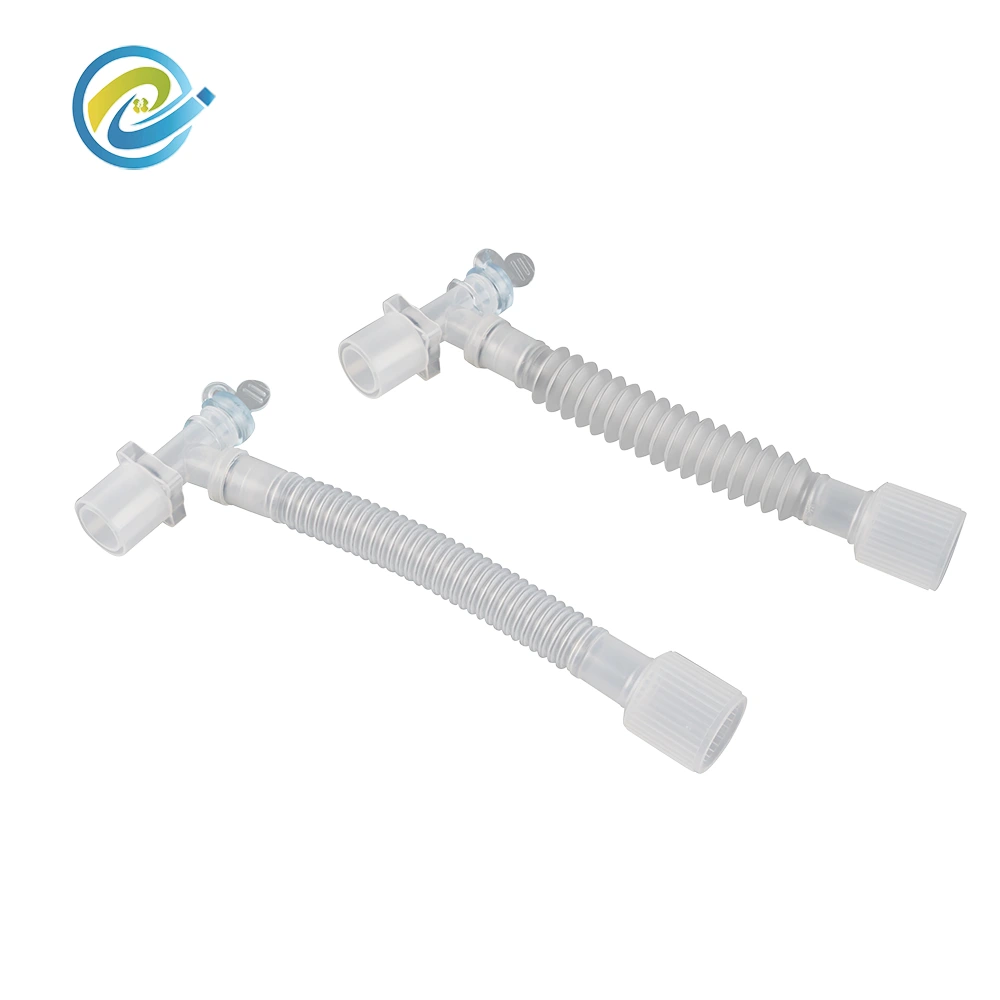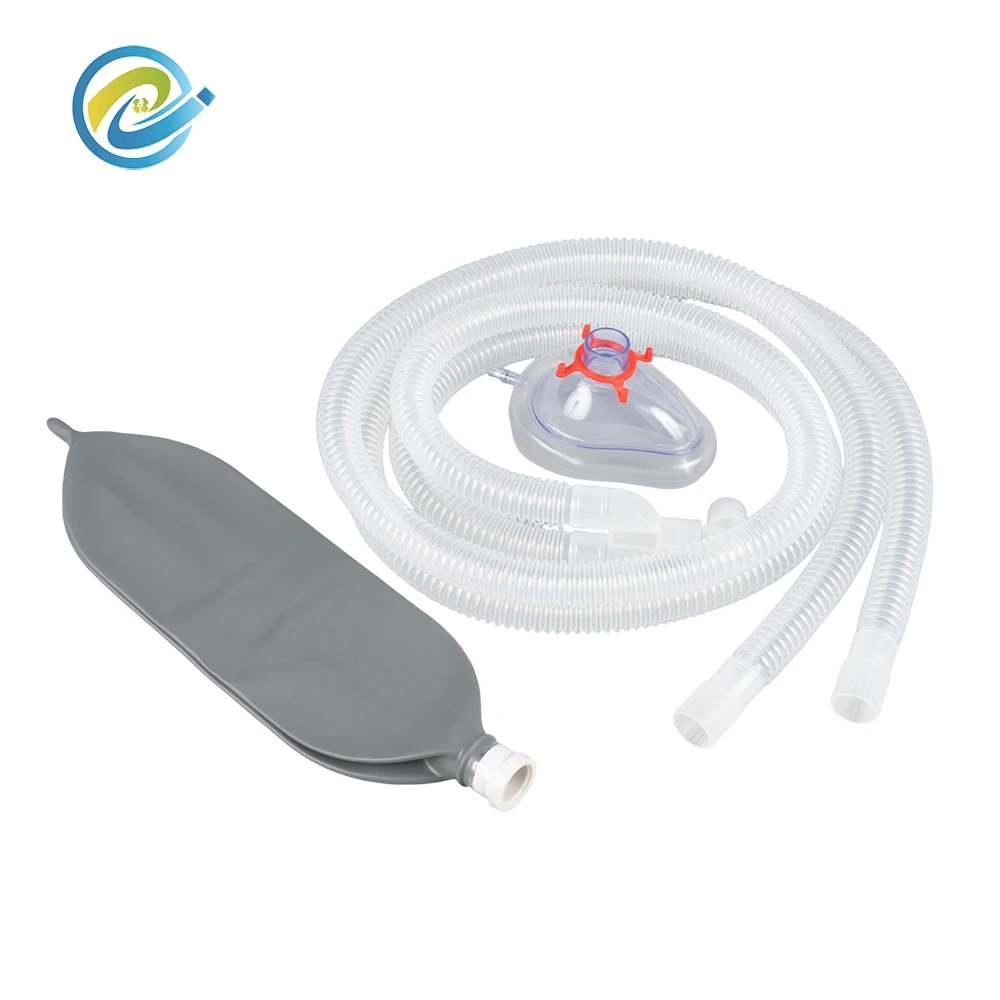



Invasive Breathing Circuit
Jianeng Medical excels in producing high-quality medical devices with reliable performance. Its Invasive Breathing Circuit enables stable respiratory support, featuring precise control and comprehensive protection. Compatible with most ventilators, it supports bulk and customized purchases, offering practical options for medical institutions to buy.
Send Inquiry
Product Description
The Invasive Breathing Circuit is a key medical device that provides direct ventilatory support to the lungs by establishing an artificial airway, and is widely used in critical care respiratory support scenarios. Its core function is to deliver air at a specific pressure to the patient’s lungs, helping patients with impaired respiratory function to inhale and exhale smoothly, and gaining valuable time for recovery and treatment. The product consists mainly of five catheter segments and two collection cups, featuring a rational structural design that is compatible with most clinically used invasive ventilators. It is an indispensable medical accessory in intensive care, surgical anesthesia, and other settings.
Working Principle
The Invasive Breathing Circuit operates as a complete gas circulation support system, ensuring the safety and stability of respiratory support.
First, through a matched humidifier, humidified air is continuously delivered into the circuit, maintaining optimal humidity, preventing dry gas from irritating the respiratory tract, and avoiding water mist condensation that could cause blockages.
At the same time, a negative-pressure suction device promptly draws exhaled gas and residual anesthetic from the patient into a collection bag, facilitating subsequent gas analysis and patient monitoring by medical staff. This design precisely maintains the stability of the gas mixture in the circuit, ensuring accurate control of inhaled anesthetic concentration while reducing waste of drugs and gases.
The specific circulation process is as follows: during exhalation, gas from the patient enters the circuit through a small catheter;
it is then processed by a small absorber or filter to remove carbon dioxide and other metabolic waste;
subsequently, the treated air or oxygen is reintroduced into the circuit to maintain the appropriate anesthetic concentration;
finally, the recycled gas is inhaled by the patient again, forming a complete respiratory support cycle.


Product Features
1.Closed-loop intelligent control: Automatically adjusts the flow, velocity, and pressure of inhaled gas based on preset ventilation parameters and real-time feedback such as circuit pressure, accurately achieving the desired therapeutic goals, reducing human error, and improving treatment safety.
2.High control precision: Ensures uniform gas distribution, effectively reducing respiratory fluctuations and enabling more precise control of inhaled gas to meet the needs of different patients.
3.Cost savings: By optimizing gas consumption and reducing waste from anesthesia machines, long-term use can significantly lower clinical medical supply costs.
4.Scientific tubing design: Optimized layout minimizes interference between tubes, ensuring smooth gas delivery and circulation.
5.Stable anesthetic concentration: Maintains consistent anesthetic levels, providing reliable support for surgical anesthesia and postoperative recovery.
6.Comprehensive protection: Helps maintain positive end-expiratory pressure (PEEP), reducing pressure injury to the lungs and thoracic cavity and lowering the risk of complications.
Applicable Scenarios and Conditions
The Invasive Breathing Circuit is primarily used in clinical scenarios requiring invasive respiratory support, including intensive care units, surgical anesthesia, and postoperative recovery rooms. It is suitable for the following conditions:
1.Severe respiratory failure accompanied by hypoxemia, hypercapnia, or abnormal respiratory rate;
2.Central respiratory depression where the patient cannot maintain a normal breathing rhythm independently;
3.Severe lung diseases that significantly impair respiratory function;
4.Postoperative or anesthesia recovery periods where assisted ventilation is needed to help patients regain spontaneous breathing;
5.Respiratory muscle fatigue or failure where the patient is unable to complete spontaneous breathing movements.


Procurement Advantages
The Invasive Breathing Circuit adopts a standardized structural design, making it compatible with most invasive ventilator brands on the market. Its high universality eliminates the need for additional customized accessories. The structure is simple, core components are reliable, and strict quality testing is performed during production to ensure stability in clinical use. It supports bulk purchasing and customization, meeting the needs of medical institutions of different sizes, and is a practical medical accessory for invasive respiratory support.
Hot Tags: Invasive Breathing Circuit, Manufacturer, Supplier, Factory
Related Category
Breathing System Filters
Heat and Moisture Exchangers
Incentive Spirometers
Masks
AeroChamber
Pulmonary Function Test Accessories
Atomizers
Home Care Other Products
Disposable Breathing Circuits
Send Inquiry
Please Feel free to give your inquiry in the form below. We will reply you in 24 hours.
Related Products